PL.13
Soleria
Where light takes cellular form
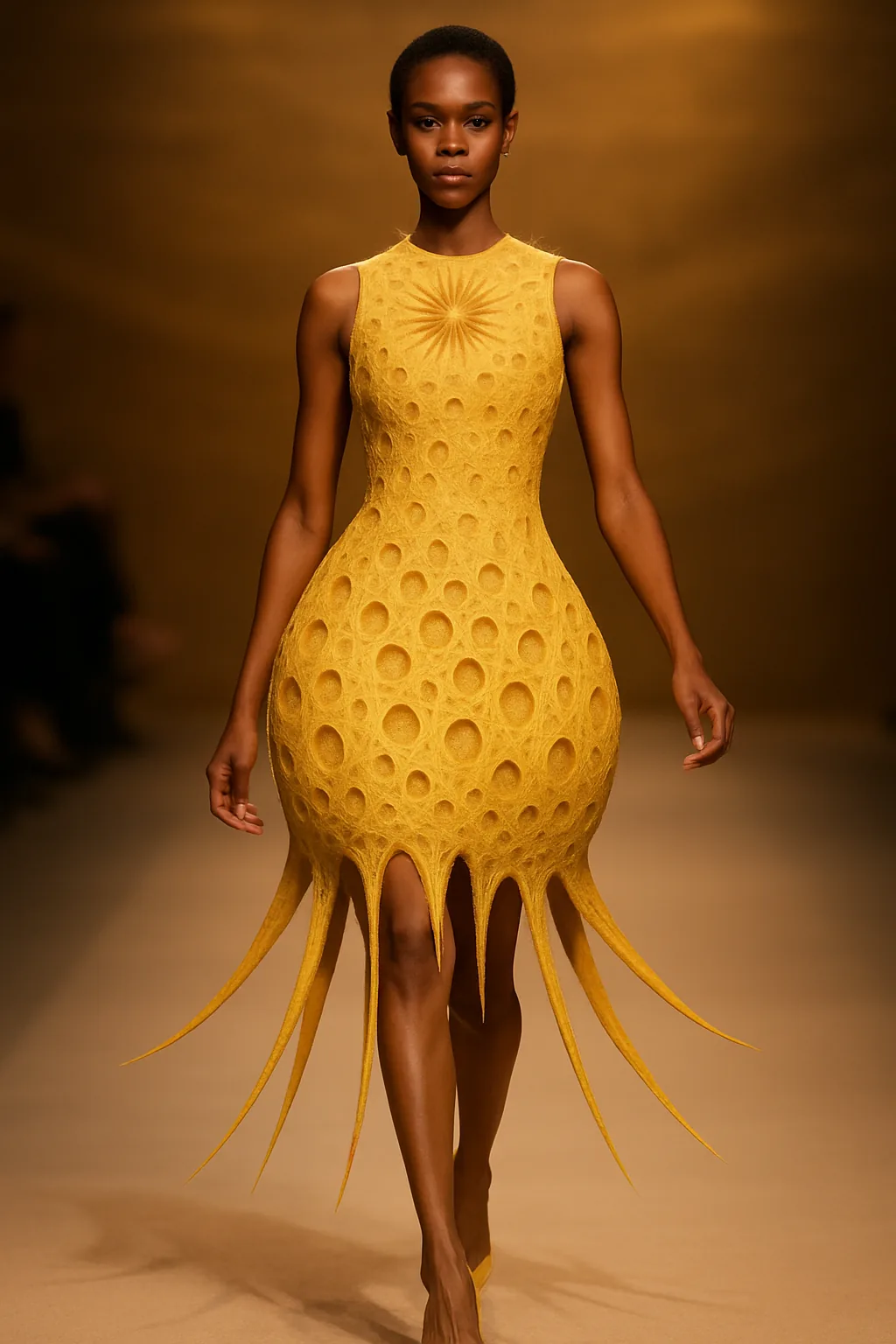
Soleria draws from the luminous geometry of Haeckel's marine worlds — a sunburst of structured curves, cratered textures, and radial precision.
The silhouette blooms outward in golden volume, ending in pointed tendrils that ripple with quiet energy.
It is not worn — it radiates.
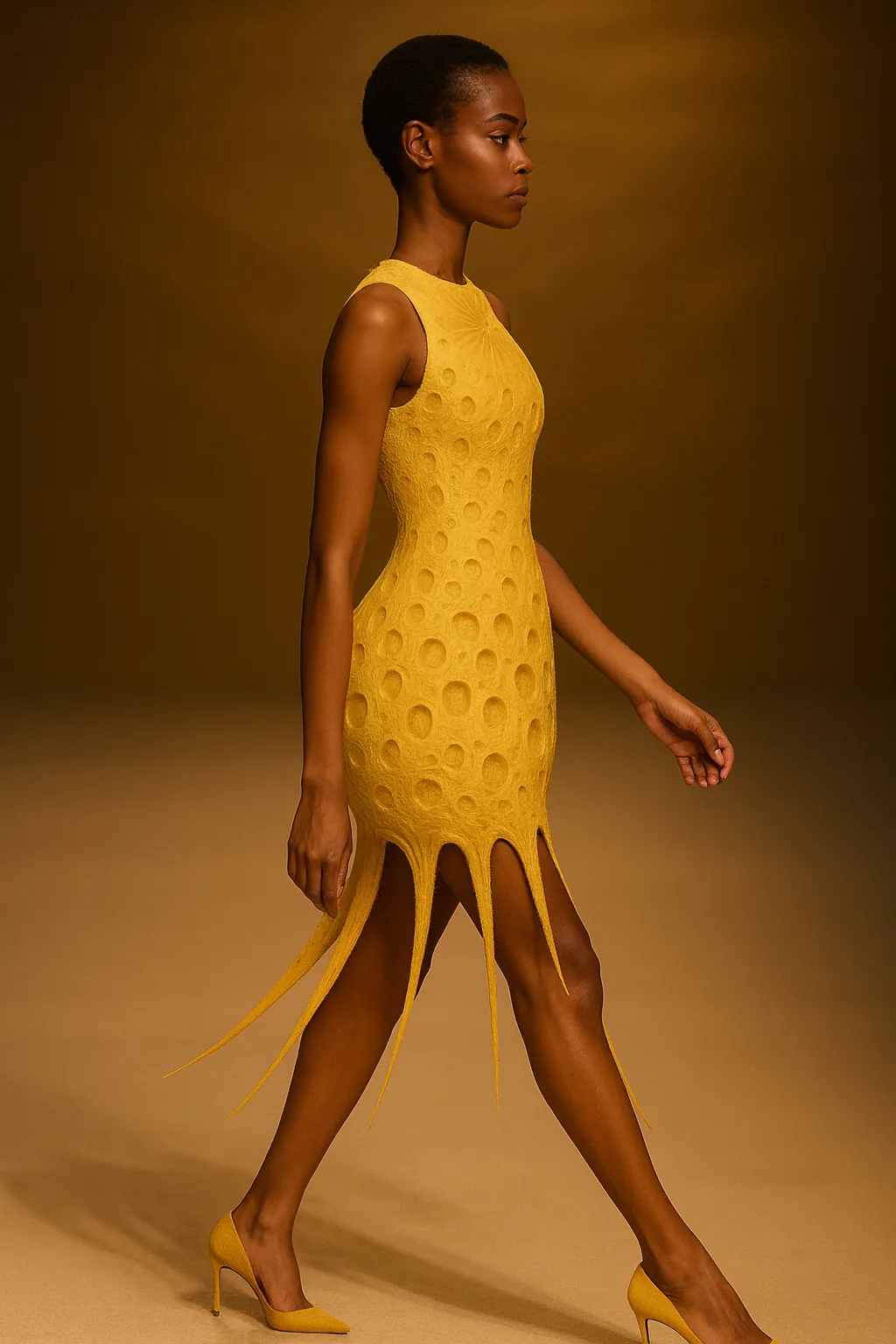
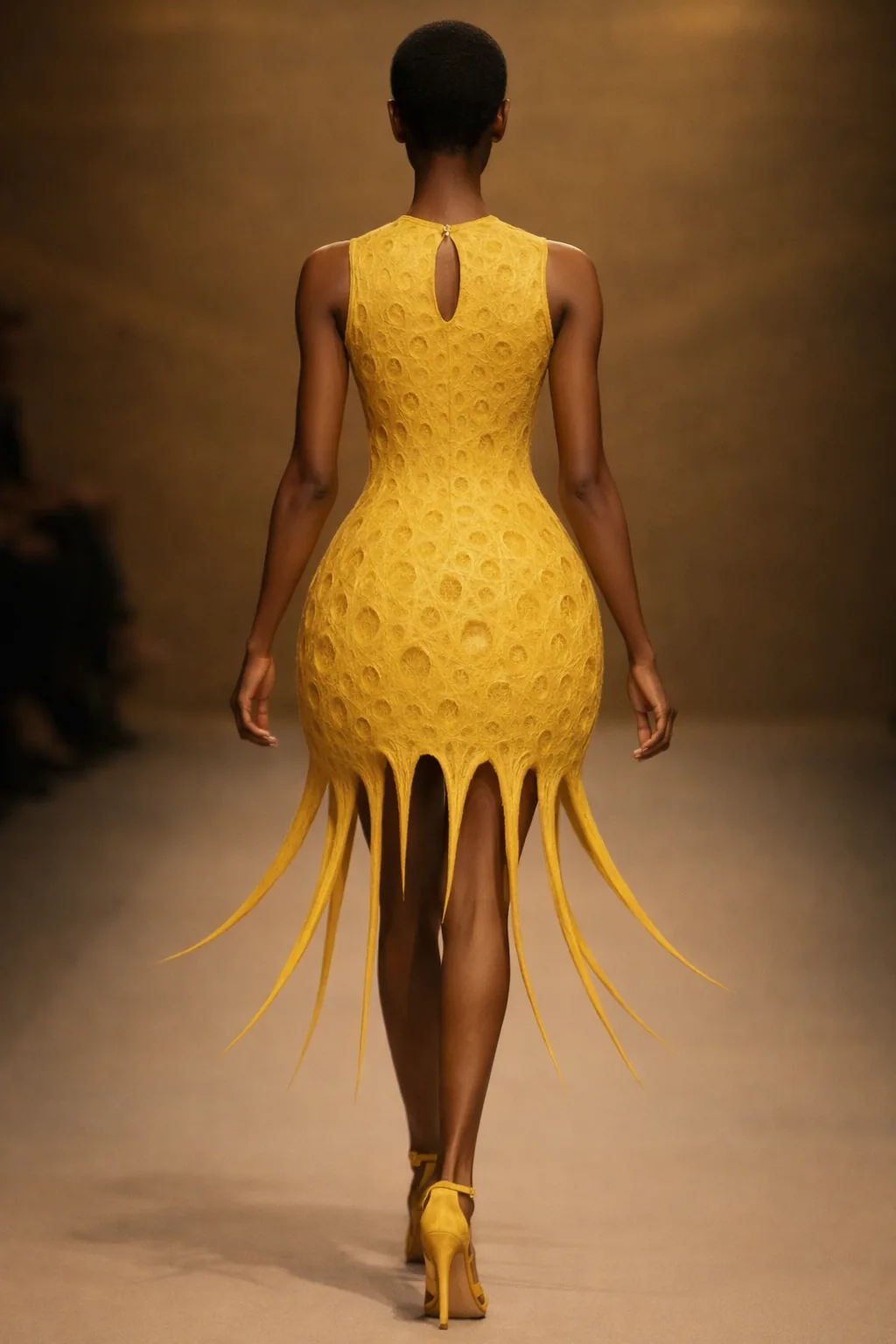
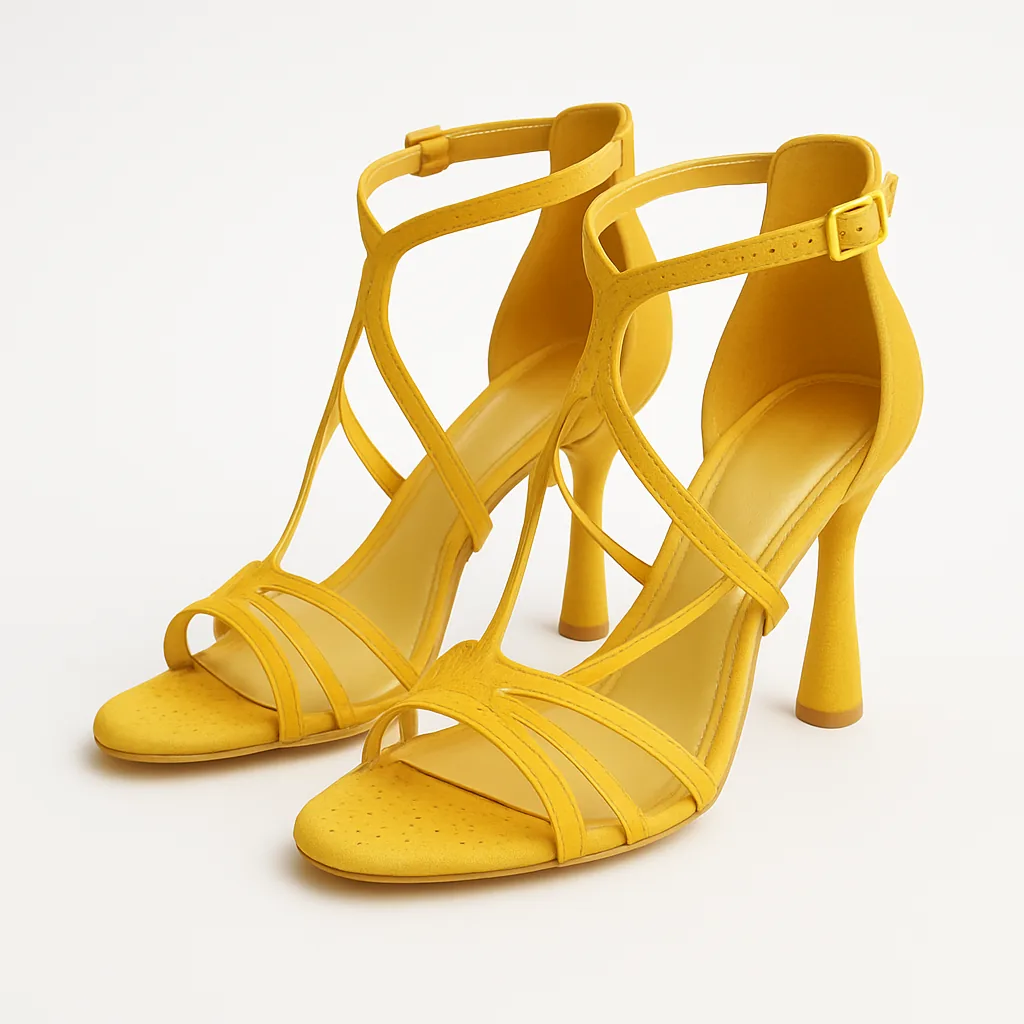
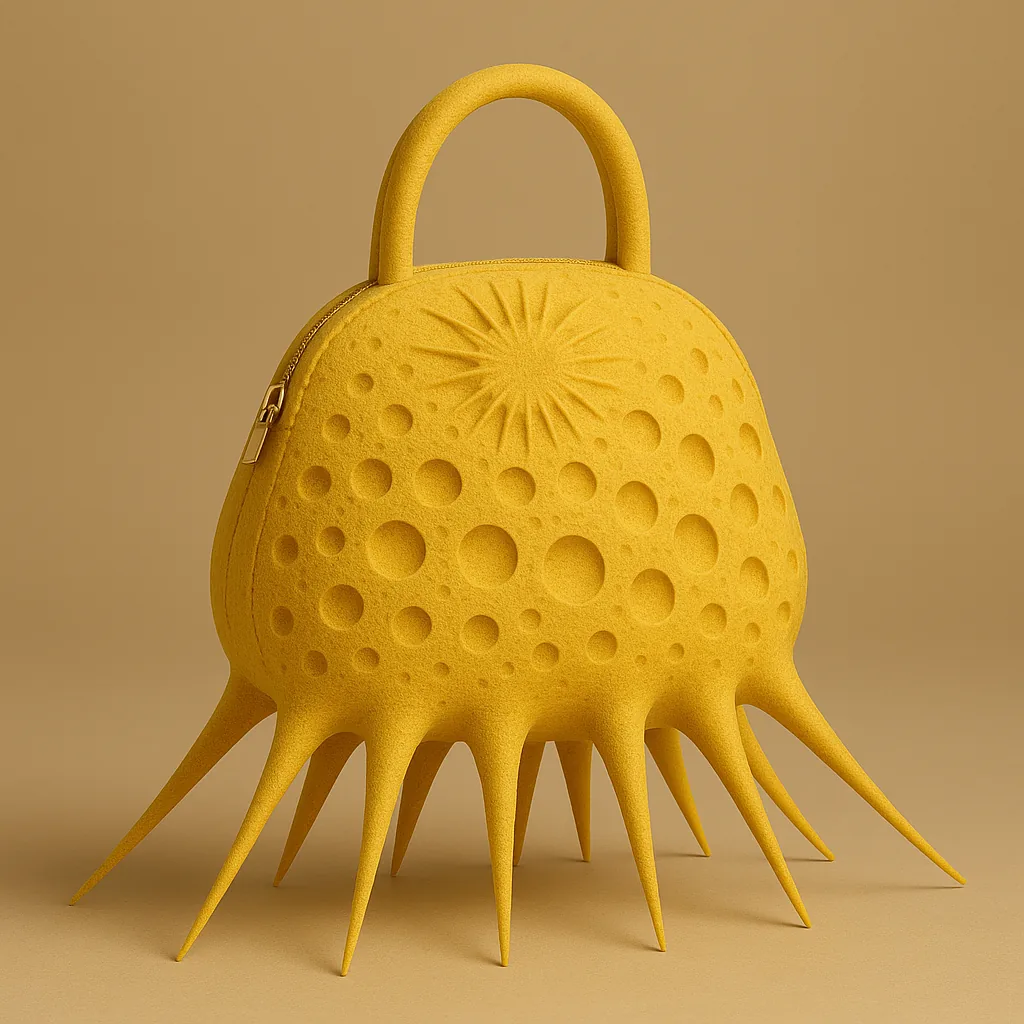
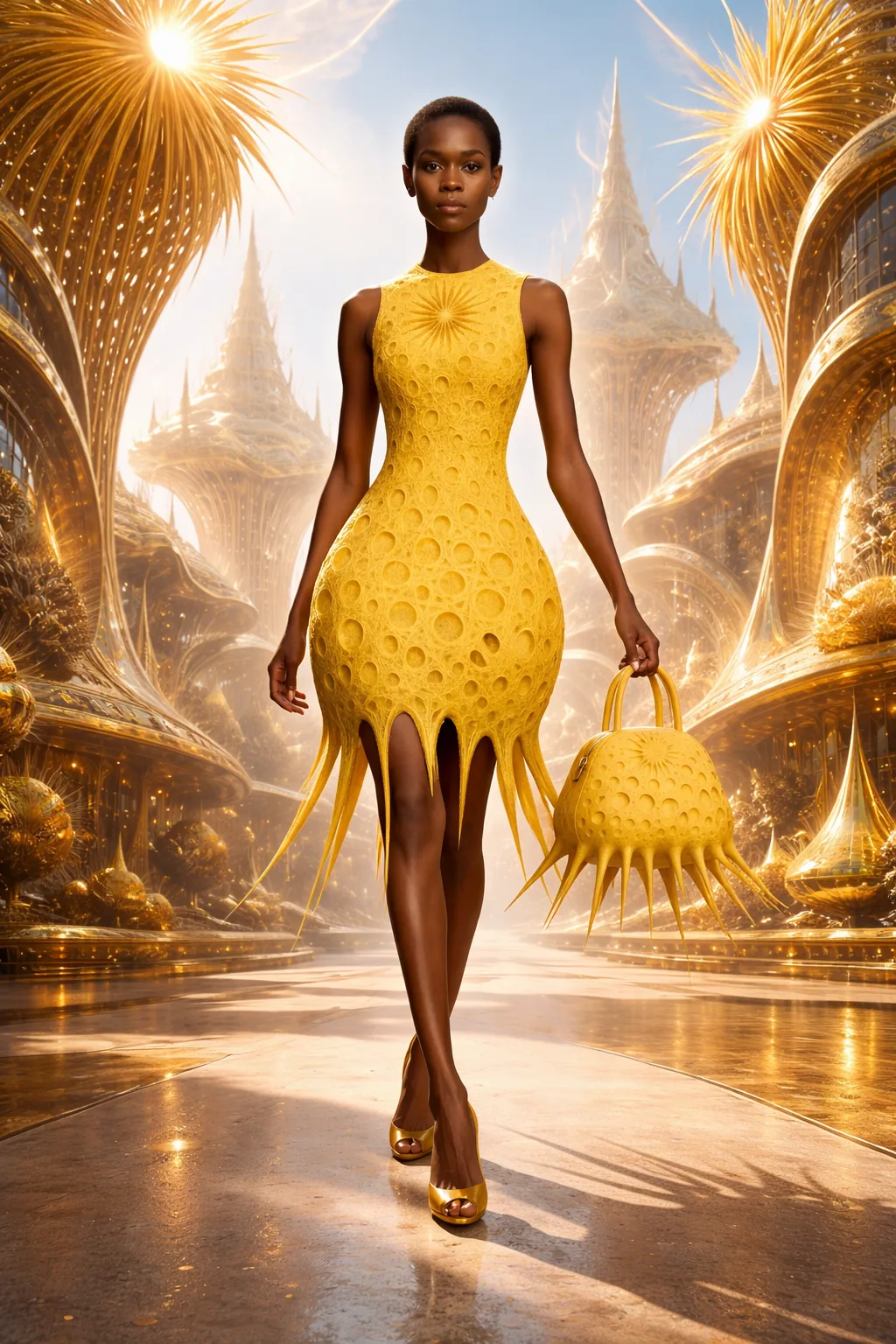
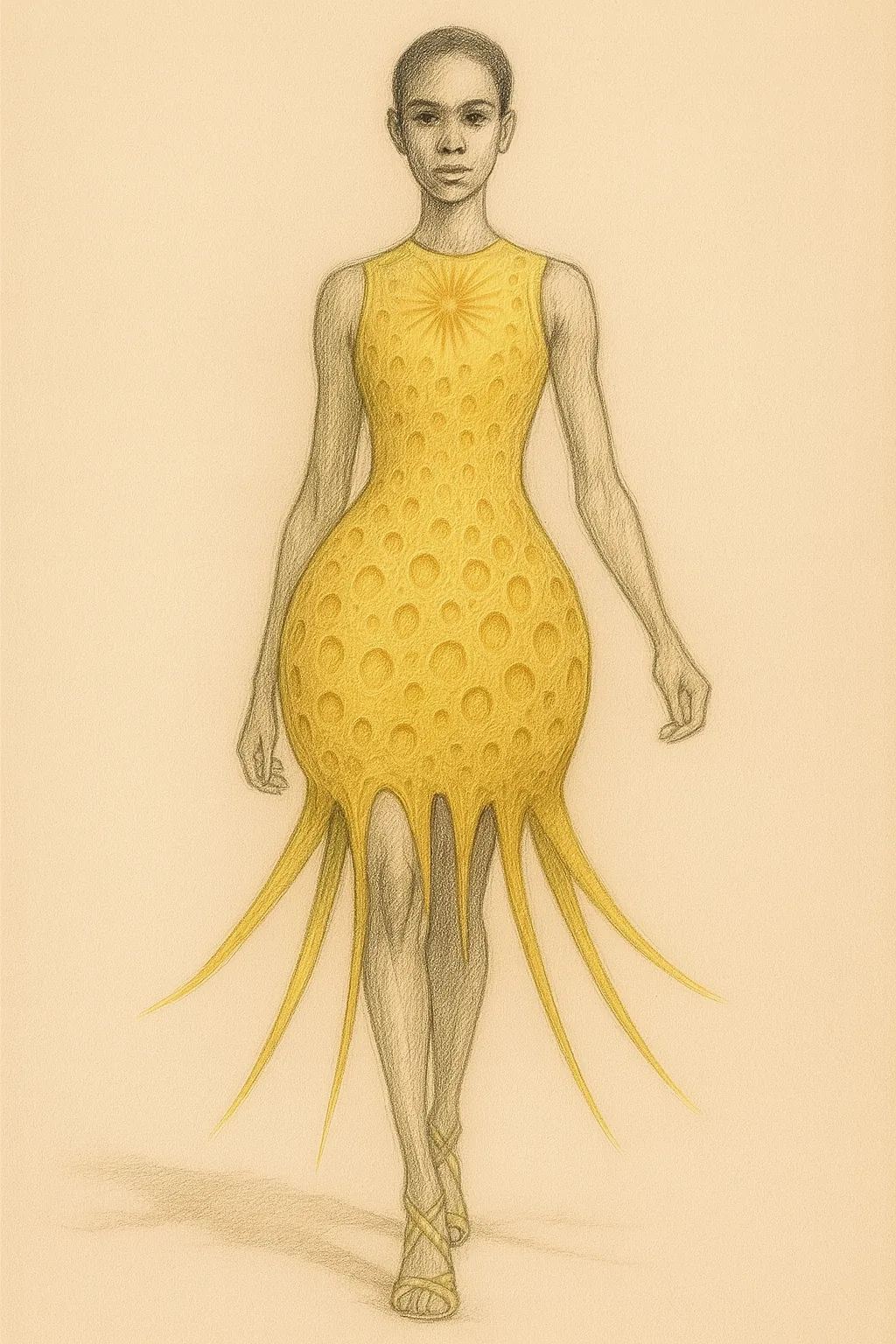
Motion study · AI animation
Technical sheet
- Soleria is a sculptural couture garment inspired by Ernst Haeckel’s marine micro-architectures and cellular geometries. The design explores the transformation of light into form, using cratered surfaces, radial symmetry, and organic expansion to create a luminous, biomorphic silhouette.
- The gown is conceived as a wearable sculpture — not decorative, but structural — where the surface itself becomes the primary architecture of the garment.
- Fitted, sculptural torso with volumetric, cellular surface
- High-neck, sleeveless bodice
- Hourglass core silhouette expanding into an organic lower structure
- Lower hem transforms into multiple elongated, tapered tendrils
- Overall form reads as a radiant, growing organism rather than a classical garment
- Fully body-mapped, form-fitting internal corset structure
- External sculptural shell bonded to internal support structure
- Torso constructed as a 3D textured shell with cratered perforation pattern
- Internal structure distributes weight to hips and waist
- Tendrils are built on lightweight biomechanical armatures (wire + flexible support rods)
- Each tendril individually shaped, reinforced, and fabric-wrapped
- Hidden back zipper or hidden back opening system
- Fully lined inner structure
- Strategic internal boning for stability and posture support
- Seamless outer appearance with hidden internal construction logic
- Laser-cut silk velvet
- OR laser-cut structured satin
- OR 3D jacquard with sculptural relief
- OR molded couture textile composite
- Silk organza
- Fine tulle
- Lightweight mesh
- Couture interfacing
- Corsetry materials (spiral steel or synthetic boning)
- Silk-covered lightweight wire structure
- OR flexible composite rods wrapped in matching textile
- Laser cutting
- 3D relief texture
- Sculptural perforation pattern
- Matte to soft-shimmer finish
- No embroidery or external ornamentation
- The surface itself is the ornament and structure
- Warm, light-reflecting tone
- Soft shimmer
- High luminosity
- Depth-enhancing shadows inside cratered texture
- Sunlit ivory
- Molten bronze
- Iridescent pearl
- Warm alabaster
- Must hold sculptural shape
- Must allow laser cutting or 3D texturing
- Must be structurally stable, not collapsing
- Must support volumetric relief
- Must remain lightweight enough for wearability
- Internal corsetry distributes weight
- Tendrils designed to be flexible and safe for movement
- Balanced center of gravity
- Designed primarily for runway, exhibition, and couture presentation
- Movement is slow, ceremonial, controlled
- Advanced couture atelier techniques
- 3D textile development or laser-cut engineering
- Hand assembly of sculptural components
- Custom mannequin draping and body casting
- Production time: very high complexity couture garment
- Haute couture showpiece
- Museum / exhibition garment
- Concept centerpiece for collection
- Not intended for mass production